
Zion Synagogue, Oradea
http://holocausttransilvania.ro/ro/files/original/cff885aa41243d7db6b2fd7a9337d015.jpg
http://holocausttransilvania.ro/ro/files/original/cff885aa41243d7db6b2fd7a9337d015.jpg
The Jews in Oradea during the Holocaust
Oradea- the ghetto and the deportation of Jews
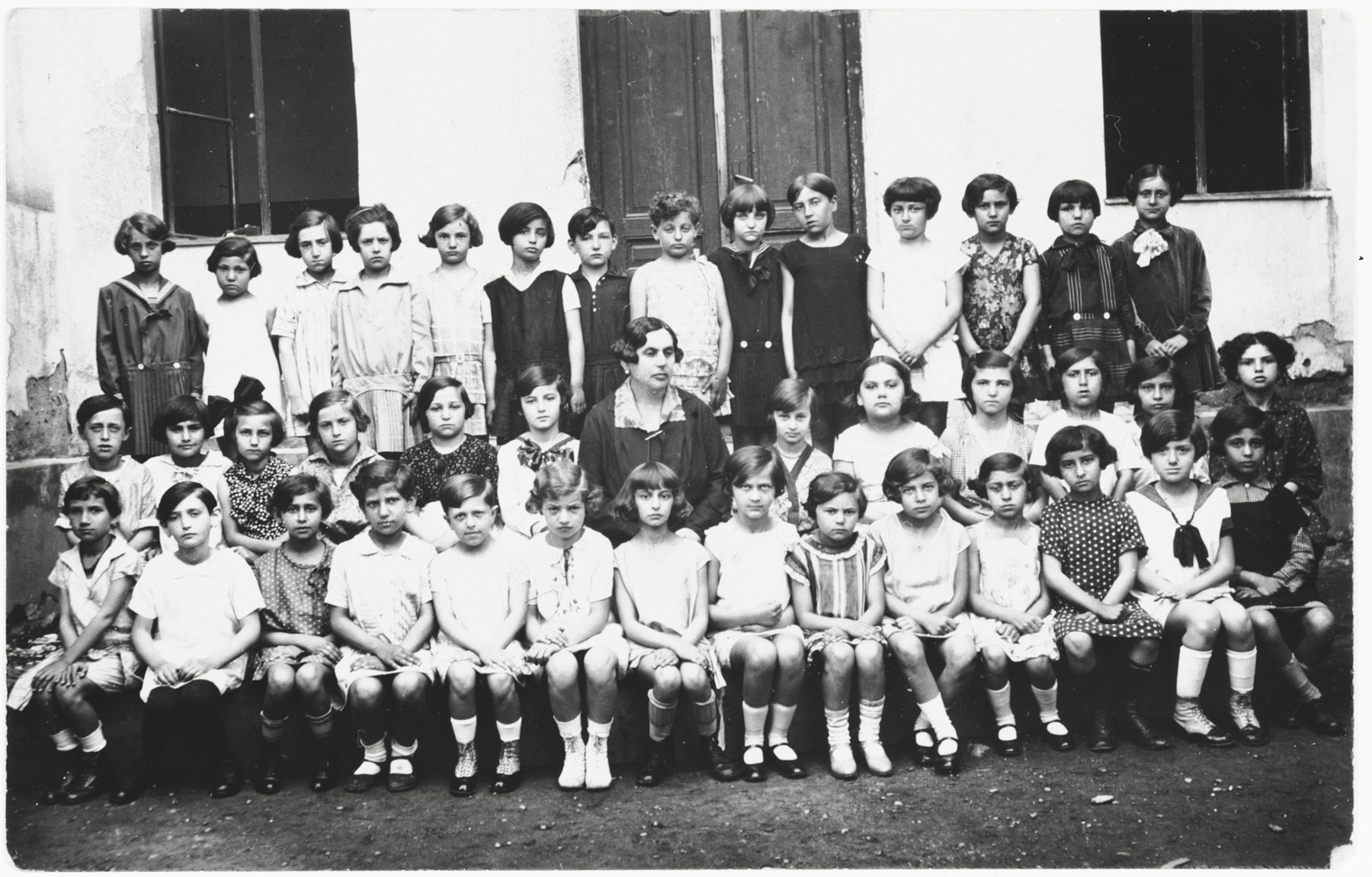
The oldest historical information attests to the presence of Jews in Oradea since 1489. Initially, their settlement in the city was forbidden. At the beginning of the 18th century, the Jews settled mainly on the outskirts of the city. 1722 is indicated as the year in which the first Jews settled in the city. After almost a decade, in 1731, the Jewish community of Oradea numbered about 400 people; they generally come from Bohemia, Moravia, and Poland. Towards the end of the same century, in 1783, the Subcetate district was created, which was inhabited for a long time and mostly by Jews. With the edicts of tolerance of Emperor Joseph II, 1786, a Jewish school was established in the city. The following year, work began on the construction of a house of prayer, inaugurated in 1794. In the same year, a Jewish hospital was opened. In the 19th century, social and self-help associations also appeared. The number of Jews in the city increased from 868 in 1825 to 6,438 in 1869 and 15,155 in 1910, respectively, representing 5.4% of the city’s population. For the interwar period, the figures indicate a population of about 20,000 Jews, their number being in 1941 of 21,333.
The Jews of Oradea were “substantially involved in the industrialization” of the city. The Jews owned mills, spirit, footwear, and glass factories were engaged in construction and logging, as well as in the printing industry. Their role was also important in the cultural life of the city. From the ranks of the Jewish community came several personalities who stood out in the field of literature, painting, medicine, and even sports. For example, Frigyes Grosz, described as “the first important Jewish intellectual in the city”, an ophthalmologist by profession and the author of many articles, established in 1830 the first ophthalmology hospital in which patients were treated free of charge.
Persecutions
In interwar Romania, Jews were repeatedly victims of acts of violence. In 1927, for example, several Jews from Oradea were killed, and synagogues were devastated by nationalist students. Towards the end of the 1930s, several anti-Jewish measures were adopted by the Romanian authorities. From September 1940, Oradea came under Hungarian administration, the city being ceded to Hungary following the Vienna Diktate. Although they were culturally and emotionally connected to Hungary, the situation of the Jews worsened. For a start, Jewish newspapers and publications were banned, and sports organizations and clubs set up by Jews were disbanded. In the summer of 1941, some of the Jews living in the city, after being declared “stateless” by the Hungarian authorities, were expelled and sent to Camenița (Kameaneț-Podilskîi), Ukraine. Between 16,000 and 18,000 Jews from Hungary were then deported to this region, where they were massacred by the Nazis. The following year, Jews in the city, of military age, including many young people, were concentrated for forced labour and sent to Ukraine. Most of the 500 young Jews employed in forced labour died while in the concentration camps.
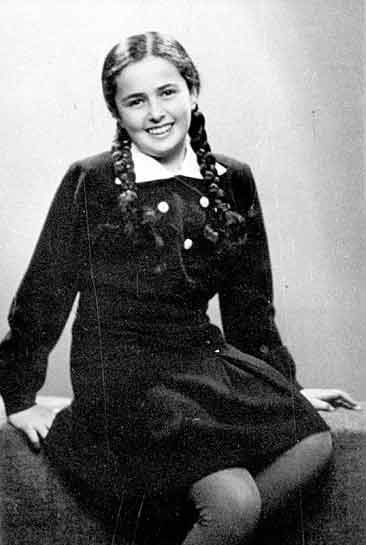
The fate of the Jews in Oradea, as well as in all of Hungary, was decided after the occupation of the country by the Nazis on March 19th, 1944, when “life” in the city became “terrible”, as Eva Heyman recorded in her diary. Within a few weeks, the Jews were required to wear the “yellow star”, and the radios became means of “Jewish” measures, as the teenager wrote. Every day, on the radio waves, information about new and new anti-Jewish laws adopted by the Hungarian authorities entered the houses of the people of Oradea. More and more rights were revoked from the Jews. Initially, some of the city’s Jews, especially the rich, were gathered and taken to the elementary school on Crișului Street, where they were held for several weeks. This was followed by the confiscation of radios, sewing machines, telephones, and, then, the obligation for Jews to leave their homes only between 8.00-9.00 in the morning.
Within a few months, some of the harshest measures were taken against the Jews. By the decree of April 26th, 1944, the fate of the Jews was placed in the hands of mayors, civil servants, and those in police structures. Benefiting from the assistance of the Nazis, on May 3rd, 1944, the gathering of Jews from Oradea began, and then their internment in the local ghetto, located in the Jewish quarter of the city, near the Great Orthodox Synagogue and the Great Square. 27,000 Jews from the city arrived here; Like all ghettos operating at the time, the Jews here were subjected to violence and torture. One of the purposes was to identify the goods and values that the Hungarians assumed the Jews had hidden or given to friends. Every day, the heads of families were taken from the ghetto and taken to the building of the Dréher Brewery, the place of torture called the “mint”, which was right next to the ghetto. Eva Heyman wrote in her diary: “Now the gendarmes walk through the ghetto houses and choose their people, only the rich, and take them to the Dréher brewery. There they torment them until they confess where they hid their wealth. I know they are beaten terribly. […] The screams of the victims are heard as far as the hospital. Now, in the houses, everyone trembles, waiting for their turn to be tortured at Dréher. […] At Dréher, people are not only beaten, but also electrocuted”.
At the same time, the ghetto was completely isolated from the outside world, being even disconnected from electricity and water sources. Between 14 and 15 people were accommodated in one room and food was lacking. The daily food of the Jews consisted of a bowl of beans and 200 grams of bread. In parallel, the properties of the Jews in the city were vandalized, the goods loaded on trains and sent to Germany. In those circumstances, many of the Jews considered suicide. Some even ended their days to escape that place of hell. In Oradea, another ghetto operated in the same period, located in the Mezey wood depot, where Jews from neighbouring regions were imprisoned. 8,000 people were imprisoned here.
The deportation of the Jews from Oradea began on May 23rd, 1944, with those from Mezey, and then continued with those from the ghetto in the city. Until June 27th, Jews from both ghettos were deported to Auschwitz. Their transport was done in terrible conditions, in overcrowded trains. In a wagon, there were even 90 people, who had only one bucket of water and one for physical needs. In the ghetto, only those Jews who managed to pretend to be ill with typhus escaped deportation. Also, some of them managed to cross the border into Romania, benefiting from the help of Romanian workers or Zionist organizations.
After the liberation of the city, on October 12th, 1944, by the Romanian and Soviet troops, the Jews from the labour battalions returned to the city. At their initiative, some community institutions were re-established to help Jews still in the locality and waiting for the deportees. However, most of the Jews deported from Oradea died in Auschwitz. In 1946, there were 6,500 Jews in the city, of whom 3,000 were from Beiuș, Chernivtsi, and Budapest. Later, most of them emigrated to Israel.
Sources
Randoplf Braham, Holocaustul în Transilvania de Nord [The Holocaust in Northern Transylvania], in Randoplf Braham, Zoltan Tibori Szabo, Enciclopedia geografică a Holocaustului din Transilvania de Nord [Geographical Encyclopedia of the Holocaust in Northern Transylvania], Chișinău, Cartier/Editura Institutului Național pentru Studierea Holocaustului din România „Elie Wiesel”, 2019, pp. 17, passim.
Daniel Łowy, Comitatul Bihor [Bihor County], in Randoplf Braham, Zoltan Tibori Szabo, Enciclopedia geografică a Holocaustului din Transilvania de Nord [Geographical Encyclopedia of the Holocaust in Northern Transylvania], Chișinău, Cartier/Editura Institutului Național pentru Studierea Holocaustului din România „Elie Wiesel”, 2019, pp. 57-69.
Eva Heyman, Am trăit atât de puțin [I have lived so little], București, Editura Alex, 1991, pp. 78-79, 85, 94, 109.
Tamás Csíki, Oradea, accessible online at https://yivoencyclopedia.org/article.aspx/Oradea
Comisia Internațională pentru Studierea Holocaustului în România [International Commission for the Study of the Holocaust in Romania], Raport Final [Final Report], Iași, Polirom, 2004, p. 276.